Venue system design · 4 min read
KTV & Karaoke Room Sound System Design Guide
Full-range speakers, subwoofers, KTV processors and wireless microphones for karaoke rooms, lounges and clubs.

A karaoke room is a small, hard, crowded space where untrained singers hold microphones close to loudspeakers. The system must make amateur vocals sound good, resist feedback and survive enthusiastic use.
The core system
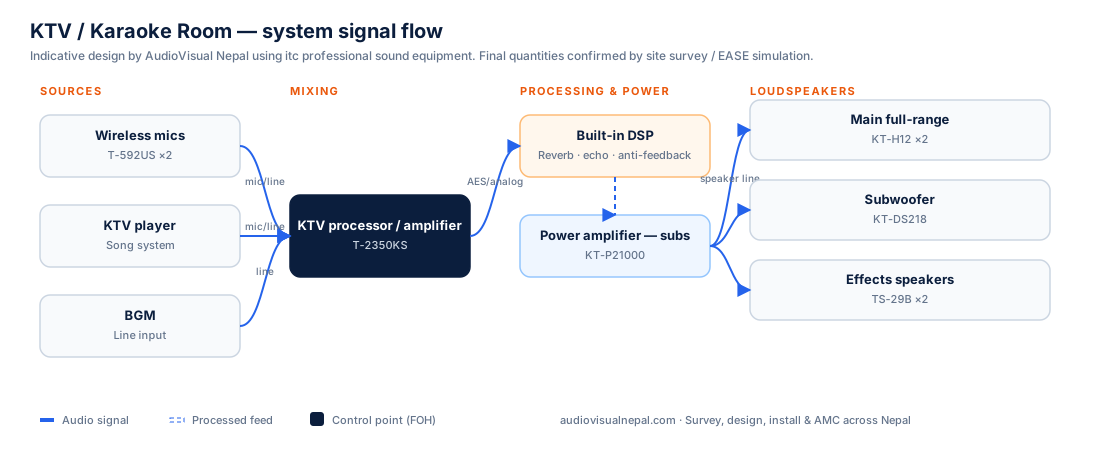
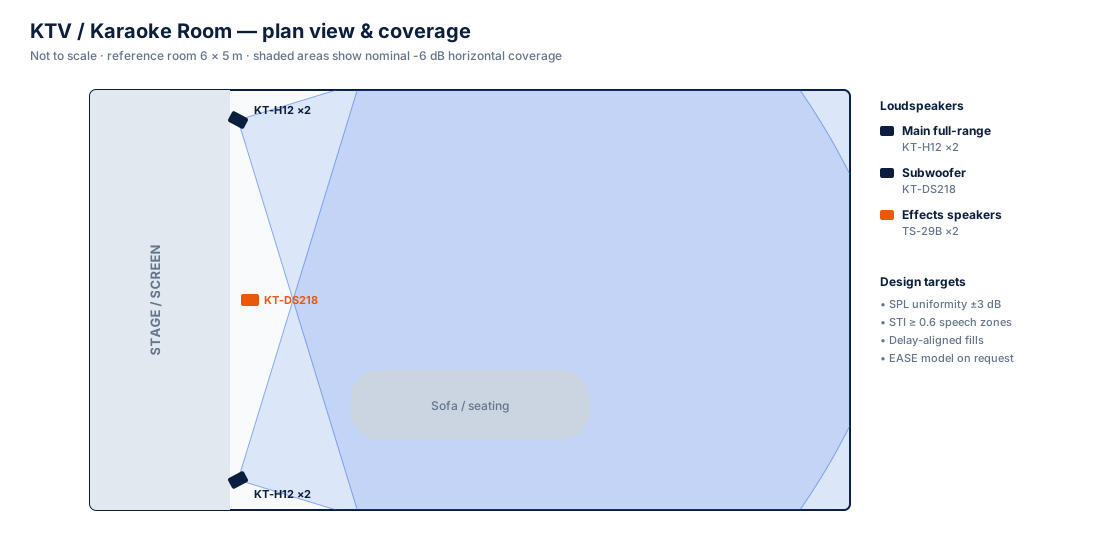
Two full-range speakers (itc KT-H12) at the screen end, a subwoofer (itc KT-DS218), and a KTV amplifier with built-in echo, reverb and anti-feedback (itc T-2350KS). Add effect speakers (TS-29B) for larger rooms.
Microphones that make singers sound better
Wireless handhelds (itc T-592US) with a warm response and good off-axis rejection reduce feedback. Keep a charging routine so the evening rush never starts with dead batteries.
Room treatment matters
Soft furnishings, carpet and a few absorptive panels make a bigger difference in a KTV room than a more expensive speaker. We advise on treatment as part of the design.
System design drawings
Indicative AudioVisual Nepal design for a typical ktv / karaoke — signal flow and loudspeaker coverage. Quantities are confirmed on a free site survey.
Recommended equipment
| Role | Model | Why |
|---|---|---|
| Full-range | itc KT-H12 | Vocal-forward KTV speaker |
| Subwoofer | itc KT-DS218 | Dual 18" for larger rooms and clubs |
| KTV amplifier | itc T-2350KS | DSP echo, reverb, anti-feedback |
| Wireless mics | itc T-592US | Forgiving, feedback-resistant |
Frequently asked questions
Why does our karaoke room keep howling?
Microphones near speakers, hard surfaces and no anti-feedback DSP. A KTV processor plus speakers placed in front of the singers fixes most rooms.
Planning a ktv / karaoke sound system?
Free site survey, system design and an itemised quotation from our engineers.